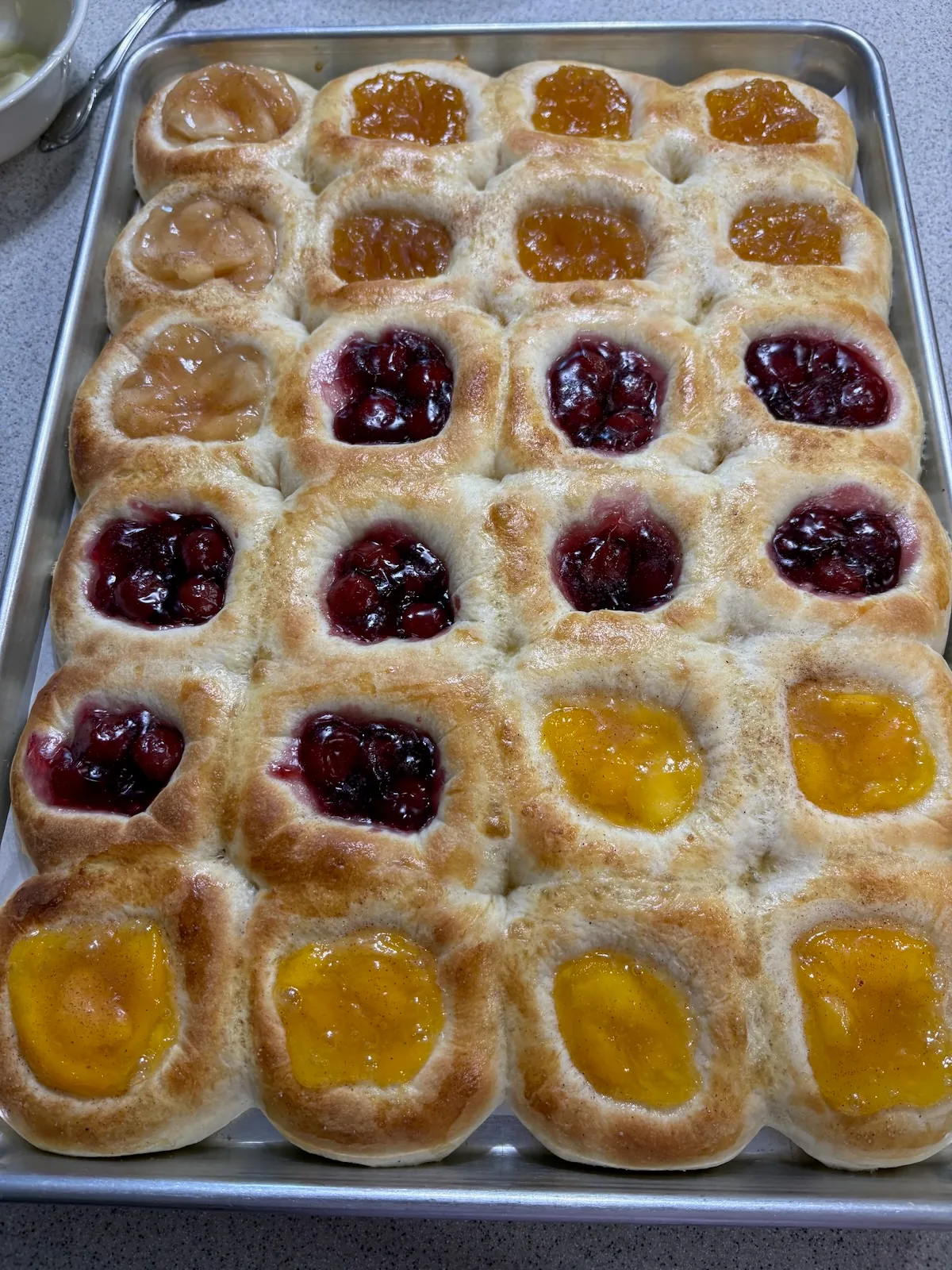
The size. The dough. The filling your family swears by, and the word you use for it. Each answer contributes to a playful, experimental comparison with regional and diaspora traditions.
Twenty-seven questions; allow about five minutes. Think of one baker or one family branch throughout. If a detail is uncertain or varied, choose “Not sure / it varied.” No judgment. Okay, minimal judgment.
Free. This is an unvalidated cultural-similarity pilot, not a genetic, genealogical, or geographic test. Old-country tradition profiles and the U.S. diaspora chapter are scored separately. It offers questions to investigate, not proof of ancestry. Outside kiosk mode, question progress is kept only in this tab's browser session so a reload or language switch can resume it; it is not saved to persistent local storage.
📏
The memories are in. Let’s read them.
Your free reading is ready.
Want a copy by email? That’s optional.
Your result appears on this device without an email or submission. If you enter an email, your 27 answer choices are sent once so the server can independently recompute and email the result; without separately enabled Census consent, those answers are not retained. The pilot does not establish ancestry or a village of origin.
Your experimental cultural-similarity reading
Old-country tradition profiles
U.S. diaspora chapter
These are relative scoring shares from an unvalidated pilot—not ancestry probabilities. Records, not recipes, establish family origins.
How this pilot works—and where it stops
Each selected answer adds preassigned descriptive points to one or more old-country tradition profiles and, independently, to U.S. diaspora profiles. Only the old-country points are normalized into shares. Your answer about where the family settled in America affects only the U.S. chapter.
The pilot withholds an old-country profile unless at least three separate answers contribute at least five old-country points. This is a safety rule for a hand-built model, not a validated statistical threshold.
The weights are hypotheses, not estimates learned from a representative sample. They have not been validated against documented family origins and cannot establish ancestry, ethnicity, nationality, biological relationship, or a village. Similar traditions can arise, travel, change, and mix.